FREE
ASSESSMENT
Every brow plan starts with a test spot
Eyebrow tattoo removal in Markham · PicoSure 755nm
Home·Tattoo Removal·Eyebrow Tattoo Removal
PicoSure 755nm picosecond laser · test spot first
From $120per session · smallest size band · free assessment
Cosmetic pigment behaves differently from body ink. Results vary between individuals; complete clearance is not guaranteed.
Cosmetic Tattoo Removal
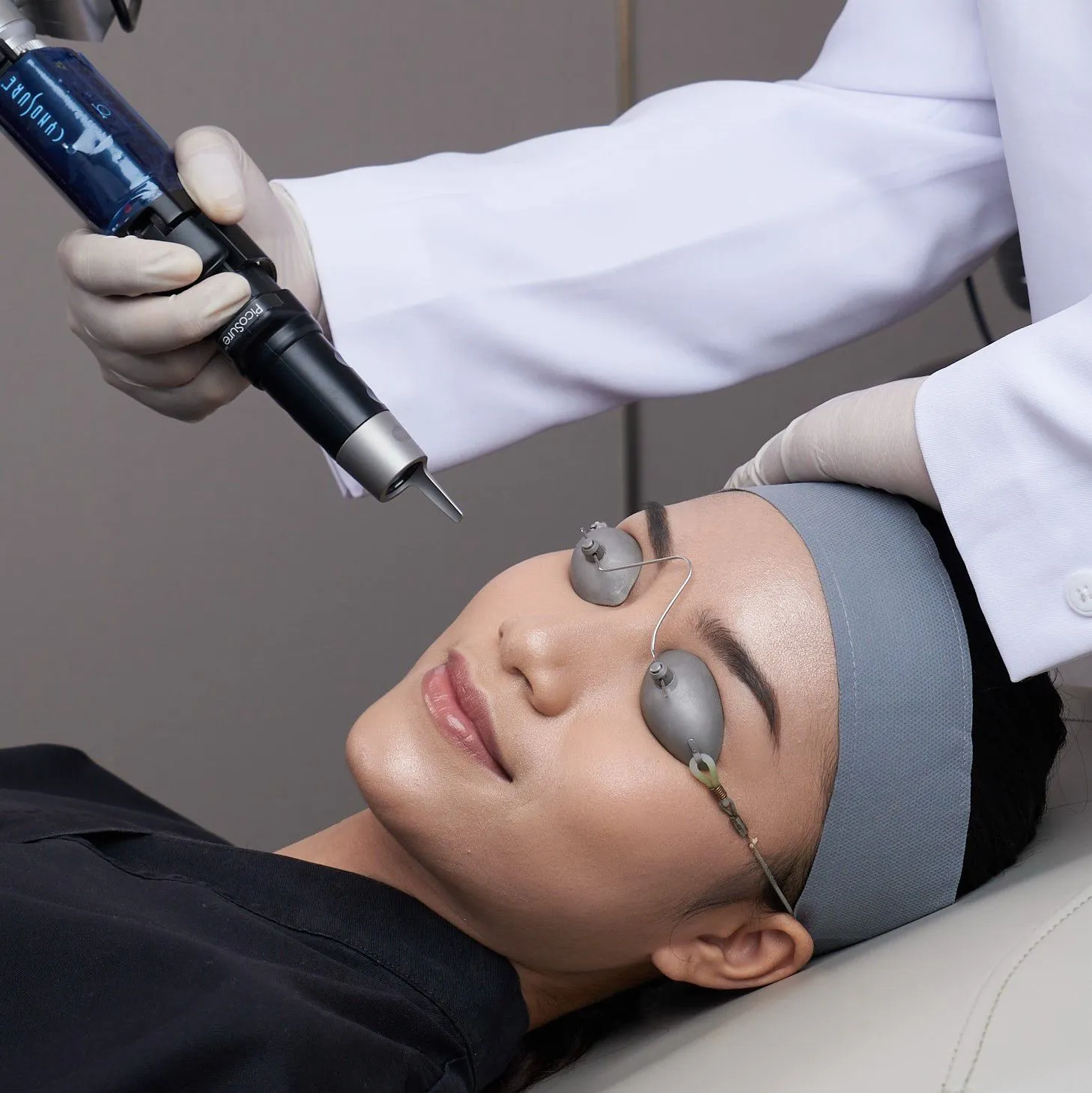
Regretting microblading, powder brows or permanent makeup that has gone grey, warm or simply out of style? We fade cosmetic brow pigment with the 755nm PicoSure picosecond laser at our Yonge & Steeles clinic. Brow pigment is not the same as body ink — so every brow starts with a test spot, and an honest answer about what your specific pigment will and won't do.
All of these are cosmetic tattoos: pigment deposited into the skin. They differ in how much pigment is in there and what colour it is, and that — not the name of the technique — decides how removal goes.
Bring any records you have. If you know the artist, the brand of pigment, or roughly when the work was done, that genuinely helps us plan.
Pigment chemistry
This is the part most clinics don't explain, and it's the reason brow removal deserves its own conversation. Body tattoo ink is usually carbon-based black or a known commercial colour. Permanent makeup pigments are frequently built on iron oxide and titanium dioxide — the same compounds used to make cosmetics opaque and to warm a shade toward brown, beige or flesh tone.
Those compounds react to laser energy chemically, not just physically. Laser light can reduce them: rust-coloured ferric oxide can shift toward darker ferrous oxide, and titanium dioxide can change oxidation state. The visible result is paradoxical darkening — a light, warm or pinkish brow can turn grey, khaki or near-black within seconds of a pulse.
That is a known, documented phenomenon rather than a botched treatment. It is often improvable with further sessions, but we cannot promise it is fully reversible. And there is no way to know your pigment's chemistry by looking at it — pigment brands don't disclose full formulations, and your brows may hold several.
Before we treat a whole brow, we treat a small, discreet area and wait. That single step tells us what no consultation can: whether your pigment lightens, sits there, or darkens. It is not an upsell and it is not optional here — it is the only responsible way to laser cosmetic pigment on someone's face. If your test spot darkens badly, we stop and talk about alternatives instead of continuing to sell you sessions.
755nm range
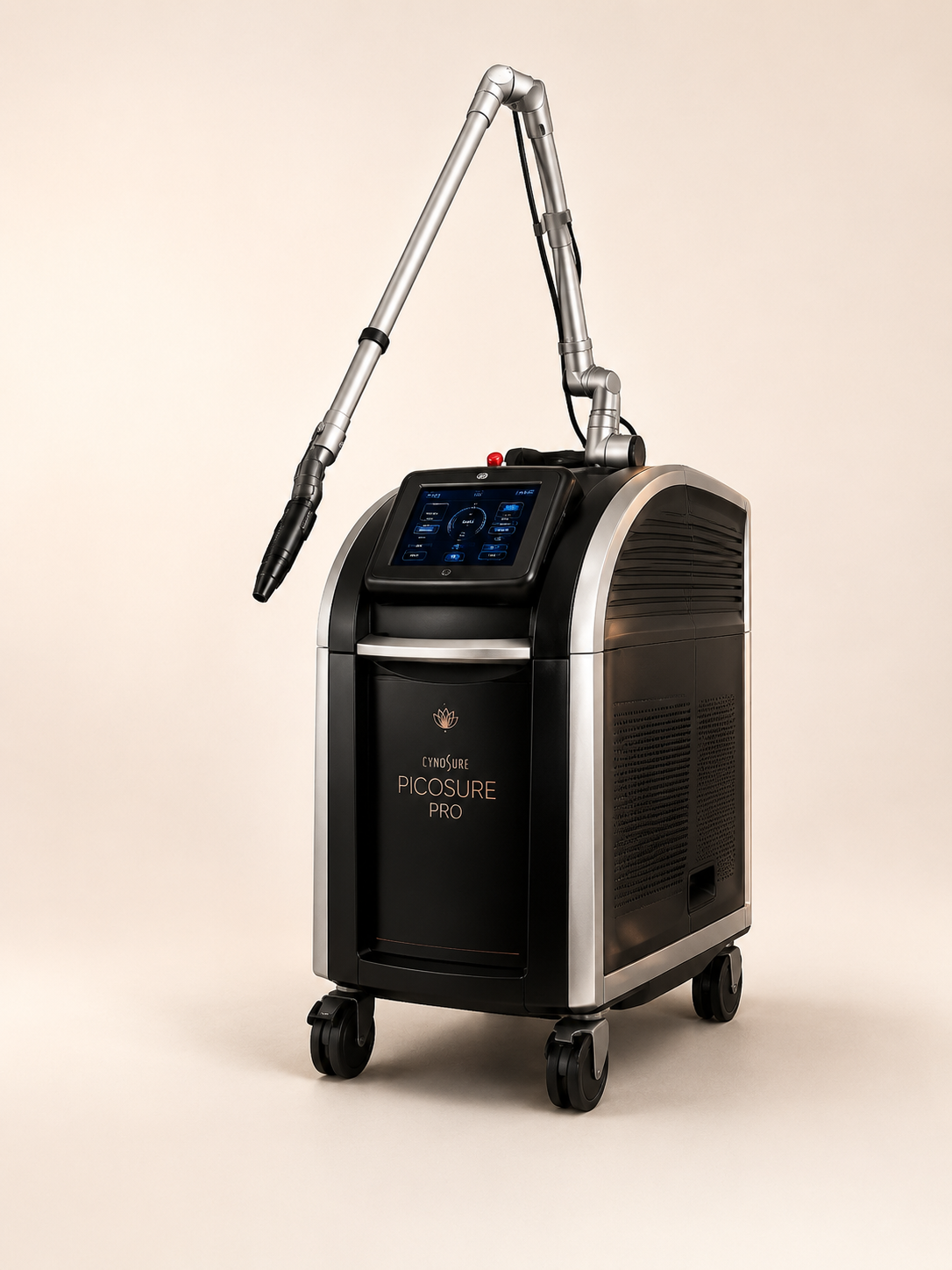
Our PicoSure is a 755nm alexandrite laser — a single wavelength. Being straight about its range matters more than claiming it does everything.
| Brow pigment colour | 755nm response |
|---|---|
| Black, blue-black, dark grey | Absorbs well — the best-case scenario |
| Cool / ash brown | Usually good |
| Warm brown, reddish-brown | Partial — often needs more sessions, may plateau |
| Orange, red, yellow | Poorly absorbed — these need 532nm, which PicoSure does not have |
| Flesh tone / beige / white "corrector" | Poor, and highest darkening risk — usually titanium dioxide heavy |
If your brows were shaded with a warm or flesh-toned pigment, a 755nm laser may simply not be the right tool, and we would rather tell you that at a free assessment than take your money for six sessions that plateau. See how the same wavelength limits apply to body tattoos.
Read this first
The 755nm wavelength is strongly absorbed by melanin — which is exactly what makes dark hair dark. It is the same physics we use deliberately in laser hair removal. Treating pigment inside your brow therefore puts energy into your brow hairs too.
Practically, that means treating the brow area can thin or shed hair in the treated zone. Regrowth is common, but it is not guaranteed, and some degree of permanent reduction is possible. Anyone who tells you laser brow removal carries zero risk to your hair is not being straight with you.
We plan around it — placement, spacing and staging — and if keeping every brow hair matters to you more than clearing the pigment, we will say that laser is probably not your best route.
Brows sit at the orbital rim, so eye protection is non-negotiable: proper occlusive eyewear on every pulse, and we do not fire over the globe. This is a standard, well-established precaution — but it is one reason to have brow work done somewhere that treats laser safety as routine rather than as an afterthought.
Alternatives
We don't offer saline removal — we only do laser. We're mentioning it anyway because for some brows it is genuinely the better answer, and you deserve to know that.
Saline removal works by tattooing a saline solution into the skin to lift pigment osmotically. It is normally performed by permanent makeup artists, not laser clinics. Its real advantage is that no laser-pigment chemistry is involved, so it cannot cause paradoxical darkening — which makes it a reasonable route for the warm, orange and flesh-toned pigments that 755nm handles badly. Its trade-offs are multiple sessions, a healing/scabbing process, and its own scarring risk if done aggressively.
If your test spot tells us your pigment isn't going to respond to 755nm, we'll say so and point you toward saline removal elsewhere rather than keep selling sessions. That's the whole point of testing first.
Safety
Picosecond laser removal has a good safety record when it's performed by a trained provider at appropriate settings, but "safe" is not the same as "risk-free", and on a face we'd rather over-explain. The specific risks with cosmetic brow pigment are paradoxical darkening, brow hair thinning, temporary redness, swelling and crusting, and — as with any laser on skin — a small risk of blistering or pigment change in the surrounding skin.
Because 755nm is heavily melanin-absorbed, deeper skin tones (Fitzpatrick V–VI) are treated conservatively with lower fluence and a test spot, to reduce the risk of post-inflammatory hyperpigmentation in the skin around the brow. We will not push aggressive settings to shorten your session count.
Every assessment screens your history and contraindications — active infection or breakout in the area, recent isotretinoin, photosensitising medication, pregnancy, a history of keloid scarring, and recent sun exposure or tanning among them. Treatments are performed by Natalia, our founder, with 10+ years in medical aesthetics. Complete clearance is not something we guarantee for cosmetic pigment; meaningful fading is the realistic goal.
From our Google profile, word for word.
"Natalia has been absolutely wonderful throughout my laser tattoo removal journey. She has been incredibly kind, professional and genuinely caring throughout every session."
"I have been seeing Natalia on and off for 10 years, and she is amazing. Professional, extremely knowledgeable, fair, and treats me with exceptional precision and care."
Eyebrow tattoo removal cost · Markham
Brows fall into our smallest size band. Exact quote confirmed at your free assessment.
Beauty & Wellness Clinic, 7191 Yonge St Unit 701-A, Markham (Yonge & Steeles) — minutes from Thornhill, Richmond Hill, Vaughan, North York and Unionville, with free underground parking. Open Mon–Sat 10am–7pm. Rated 5.0 on Google (43 reviews).
Questions
Often yes, but it depends on the pigment colour rather than the technique. Microblading, powder brows and ombré brows are all cosmetic tattoos, and the 755nm PicoSure laser clears dark, cool-toned pigment (black, blue-black, grey, cool brown) well. Warm pigments — orange, red, yellow and flesh tones — absorb 755nm poorly and may barely respond. Because we can't tell the pigment's chemistry by looking at it, we always start with a small test spot before treating the whole brow.
This is called paradoxical darkening and it's a known risk with cosmetic tattoos, not a mistake. Many permanent makeup pigments contain iron oxide and titanium dioxide. Laser energy can chemically reduce these compounds — rust-coloured ferric oxide can convert toward darker ferrous oxide, and titanium dioxide can shift oxidation state — so a light or warm brow can immediately look darker or grey. It's often improvable with further sessions, but not always fully reversible. That's precisely why a test spot is mandatory here rather than optional.
It can, and you should know that before booking. The 755nm wavelength is strongly absorbed by melanin, which is the same pigment that makes brow hair dark — so treating the brow area can thin or shed hair in the treated zone. Regrowth is common but not guaranteed, and permanent reduction is possible. We discuss this openly at your assessment and plan placement around it. If keeping every brow hair matters more to you than clearing the pigment, laser may not be your best option.
No — we only offer laser removal with PicoSure. Saline removal is a different method in which a saline solution is tattooed into the skin to lift pigment osmotically, and it's normally performed by permanent makeup artists rather than in a laser clinic. It has one real advantage: because no laser-pigment chemistry is involved, it can't cause paradoxical darkening, so it's sometimes the better route for warm, orange or flesh-toned pigment that 755nm won't clear. If your test spot suggests that, we'll tell you honestly and recommend you seek saline removal elsewhere.
Cosmetic tattoos are variable. Some faded brows lighten meaningfully in 2 to 4 sessions; densely saturated or repeatedly retouched work can need considerably more, and some pigment never clears completely. Sessions are spaced 6 to 8 weeks apart so your body can clear the fragmented pigment. We don't promise a session count before seeing how your specific pigment responds to the test spot.
Brows fall into our smallest size band, so removal is $120 per session for an area 2×2 inches or under. A package of 6 small-area sessions is $576, about $96 per session. Your exact quote is confirmed at a free assessment, which includes the test spot discussion. Call (416) 500-1510 to book.
Let the work fully heal and settle first — generally at least 6 to 8 weeks after your last microblading or touch-up appointment. Fresh cosmetic tattoos are still resolving and often look darker or more defined than they will once healed, so treating too early can mean treating pigment that would have softened on its own. If your brows were done in the last few weeks, we'll usually ask you to wait.
Related
From $120. Size-banded pricing, 3–10+ sessions, same PicoSure laser.
Learn More →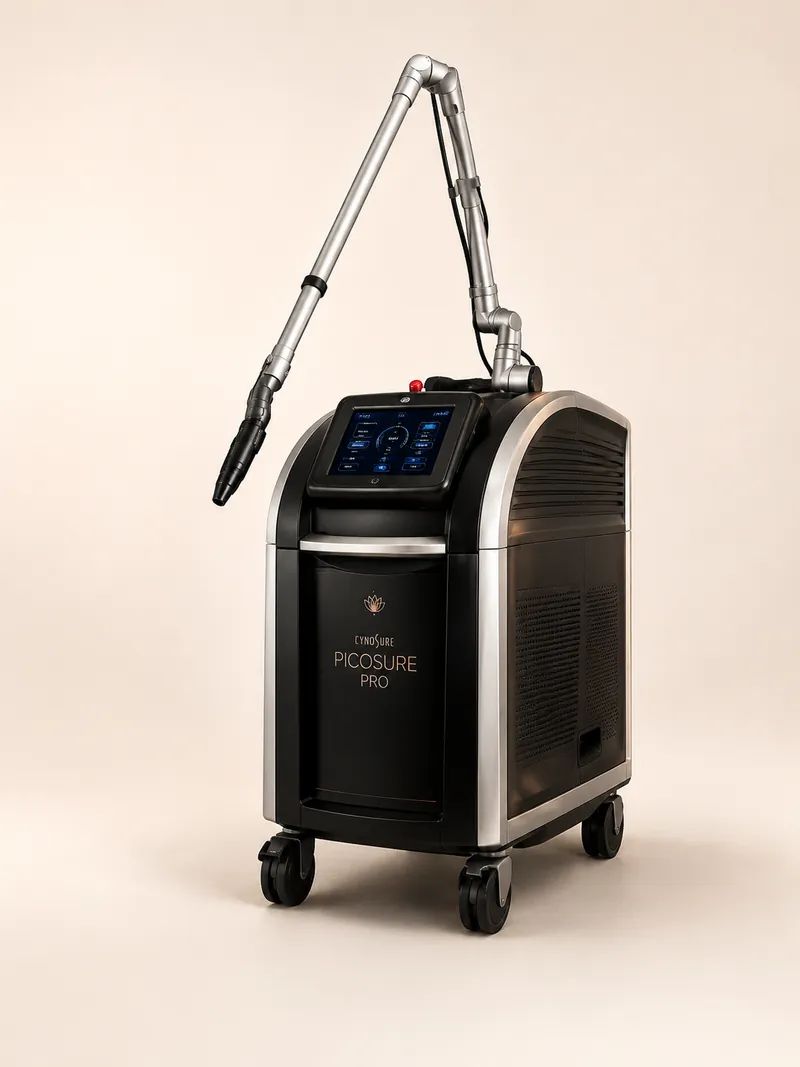
What a 755nm picosecond laser does — and honestly, what it doesn't.
Learn More →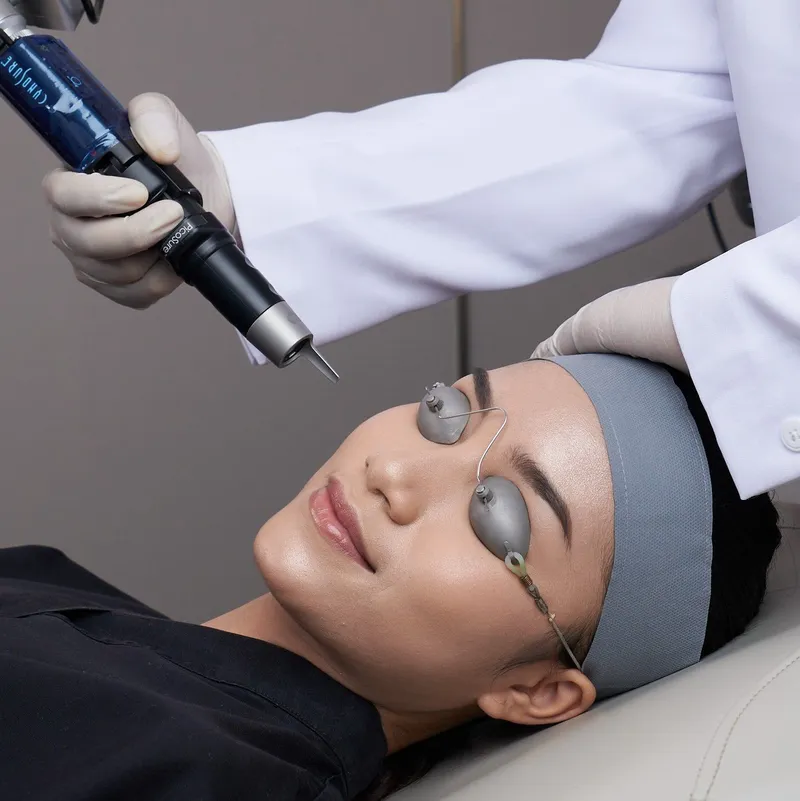
Why wavelength decides which pigments a laser can clear.
Read the Guide →Visit
Book a free assessment in Markham — we'll look at your pigment, explain the test spot, and tell you honestly if laser is the wrong tool for it. Free underground parking · Mon–Sat 10–7.
World on Yonge (Yonge & Steeles), Markham, ON L3T 0C4
Free underground parking, enter from Yonge
Mon – Sat
10:00 – 19:00
Closed Sunday
*Statutory holidays vary, please call to confirm.