
FREE
ASSESSMENT
Every treatment plan starts here
Pigmentation treatment in Markham · PicoSure Pro

Home·Treatments·Pigmentation Treatment
From $300per session · 3–6 sessions typical · free assessment
Melasma is assessed carefully — sometimes a different approach is safer. Results vary between individuals.
Laser Skin Treatment
Dark spots that makeup can't hide? Sun damage making your skin look older? Stubborn melasma that won't respond to creams? Post-acne marks that linger for months? PicoSure laser shatters pigmentation at the source, clearing your skin without harsh chemicals or long recovery.
Hyperpigmentation is one of the most common and frustrating skin concerns affecting people of all ages and skin types. Whether you're dealing with age spots from years of sun exposure, stubborn melasma triggered by hormones, post-inflammatory marks left behind by acne, or general uneven skin tone, PicoSure laser treatment offers a safe, effective solution that works where topical products fail.
Unlike topical creams that take months to show minimal improvement, or harsh chemical peels that risk inflammation and rebound pigmentation, PicoSure targets melanin deposits at their source with precision and minimal downtime. The revolutionary picosecond technology delivers ultra-short bursts of energy that create a photomechanical impact—physically shattering melanin clusters into microscopic particles that your body naturally eliminates through the lymphatic system.
This approach is fundamentally different from older Q-switched lasers and IPL devices that rely on heat to coagulate pigment. By avoiding excessive thermal damage, PicoSure minimizes the risk of inflammation, scarring, and paradoxical darkening (post-inflammatory hyperpigmentation) that commonly occurs with heat-based treatments, especially on darker skin tones. The result is safer, more predictable pigmentation clearance with faster healing and lower complication rates.
The PicoSure laser emits light at a 755nm wavelength, which is specifically absorbed by melanin (the pigment responsible for dark spots) while leaving surrounding tissue unharmed. Think of it as a targeted missile that locks onto brown pigment and ignores everything else. The pulse duration is measured in picoseconds—trillionths of a second—allowing the energy to be delivered so quickly that pigment particles shatter before heat can build up and damage nearby cells.
This "pressure wave" effect breaks melanin into fragments so tiny they can be easily absorbed and cleared by your immune system's macrophages and lymphatic drainage. Over the 2-4 weeks following treatment, these melanin particles are gradually flushed away, and the treated spots progressively fade. Because the treatment is highly selective for melanin and generates minimal collateral heat, PicoSure can safely treat pigmentation on all areas of the face and body, including delicate regions like around the eyes, hands, chest, and shoulders.
Our clinic is located at 7191 Yonge St, Unit 701-A, inside World on Yonge at Yonge & Steeles in Markham — with free underground parking via the rear entrance. We welcome clients for PicoSure pigmentation treatment from across York Region, including Thornhill, Richmond Hill, Vaughan, North York, and Scarborough. Every consultation includes an honest skin-tone assessment and patch testing before treatment. Rated 5.0 on Google (43 reviews) · Founded by Natalia, 10+ years experience.
Technology
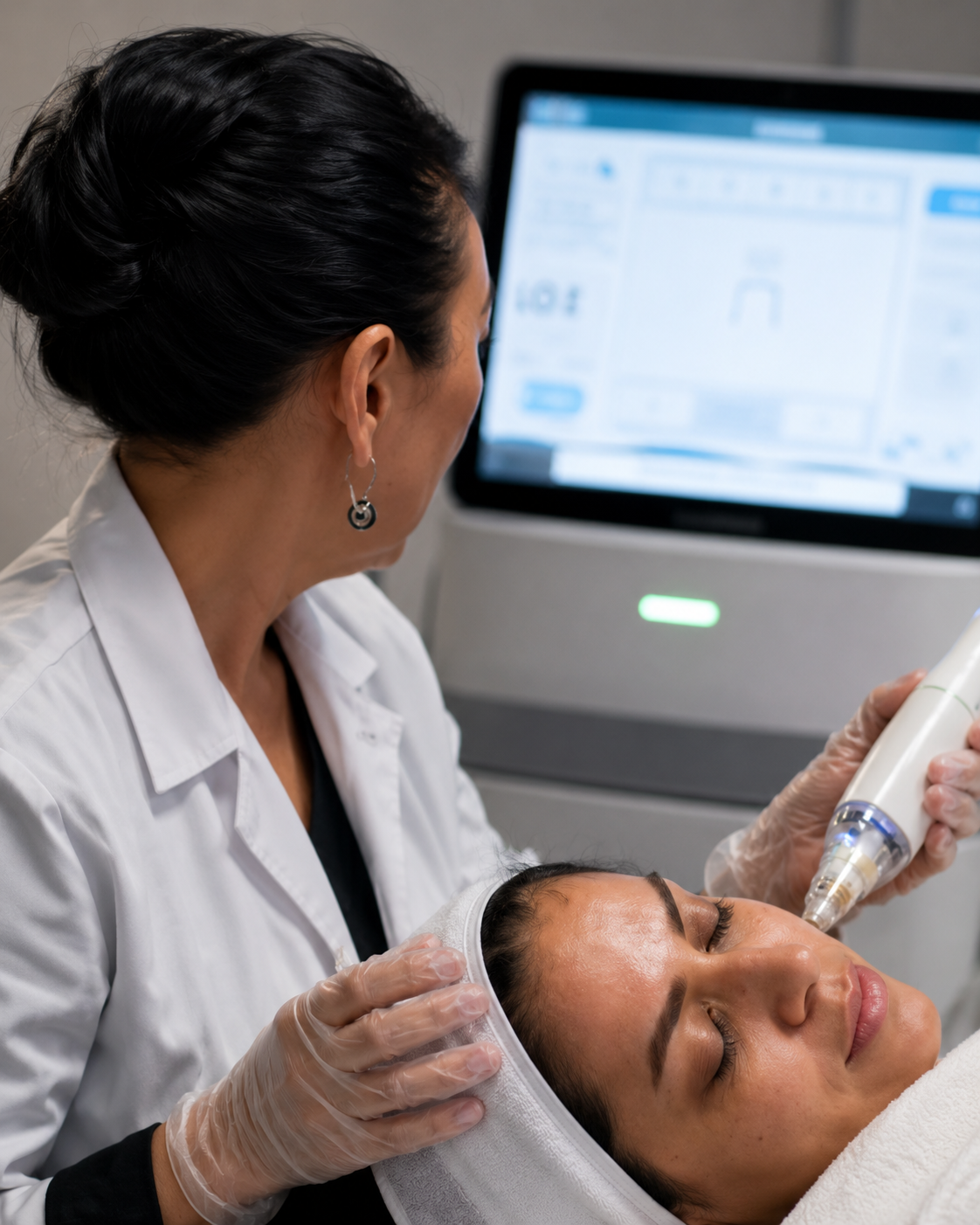
The gold standard wavelength for melanin targeting. 755nm light is preferentially absorbed by melanin pigment while sparing surrounding tissue, allowing precise treatment of dark spots without damaging healthy skin. Superior to 1064nm (Nd:YAG) for epidermal pigmentation.
Delivers energy in trillionths of a second (750 picoseconds), creating photomechanical impact rather than photothermal damage. This shatters pigment into microscopic particles that clear faster and more completely than heat-based lasers, with minimal risk of burns or PIH.
Proprietary lens technology that concentrates energy into high-power micro-beams. Creates LIOB effect (Laser-Induced Optical Breakdown) for treating both epidermal and dermal pigmentation. Also stimulates collagen for skin rejuvenation alongside pigment clearance.
The science
Not all dark spots are created equal. Understanding the type of pigmentation you have is crucial for effective treatment:
"The tyrosinase enzyme controls melanin production—UV exposure activates it, creating pigment as a protective response. Cumulative damage over decades creates the age spots we see."
Melanin production occurs in specialized cells called melanocytes, which sit at the base of the epidermis. When skin is exposed to UV radiation, inflammatory mediators, or hormonal signals, the enzyme tyrosinase is activated. This enzyme catalyzes the conversion of the amino acid tyrosine into melanin pigment through a complex biochemical pathway.
In healthy skin, this process is regulated and melanin is distributed evenly, creating a tan that fades as cells naturally shed. However, with chronic UV exposure, inflammation, or hormonal disruption, melanocytes can become overactive or cluster together, producing localized areas of excess melanin. This creates the visible dark spots we see as age spots, melasma, or PIH. Once formed, these melanin deposits are remarkably stable—topical products can only minimally inhibit new melanin formation, but they cannot remove existing deposits. This is where PicoSure excels.
Sun damage is cumulative and largely irreversible without intervention. Every unprotected sun exposure—whether intentional tanning or incidental exposure while driving, gardening, or walking—adds to your lifetime UV dose. By age 40-50, the accumulated damage manifests as age spots, uneven tone, and textural changes.
UV radiation causes DNA damage in melanocytes, triggering them to produce excess melanin as a defensive response. Over time, some melanocytes become permanently activated or damaged, continuously producing pigment even without ongoing sun exposure. This is why age spots don't fade on their own—the cells are locked in a hyperpigmented state. PicoSure breaks this cycle by shattering the accumulated melanin, allowing fresh, evenly toned skin to emerge.
Pigmentation exists at different depths in the skin, which affects treatment approach and prognosis:
A Wood's lamp examination during consultation helps determine pigmentation depth by observing how the spots fluoresce under UV light. This guides treatment planning and sets realistic expectations.
| Type | Description | PicoSure Safety | Special Considerations |
|---|---|---|---|
| I-II | Very fair to fair, burns easily | Excellent | Minimal PIH risk, aggressive settings safe |
| III | Medium, tans gradually | Excellent | Low PIH risk, standard protocols |
| IV | Olive/light brown, tans easily | Very good | Moderate PIH risk, conservative settings initially |
| V | Brown, rarely burns | Good | Higher PIH risk, test patches recommended |
| VI | Dark brown/black, never burns | Good | Highest PIH risk, very conservative approach, strict aftercare |
What to expect
From consultation to recovery — here's exactly what to expect at every stage.
Your PicoSure pigmentation journey begins with thorough consultation and skin analysis to assess type, depth, and treatment plan.
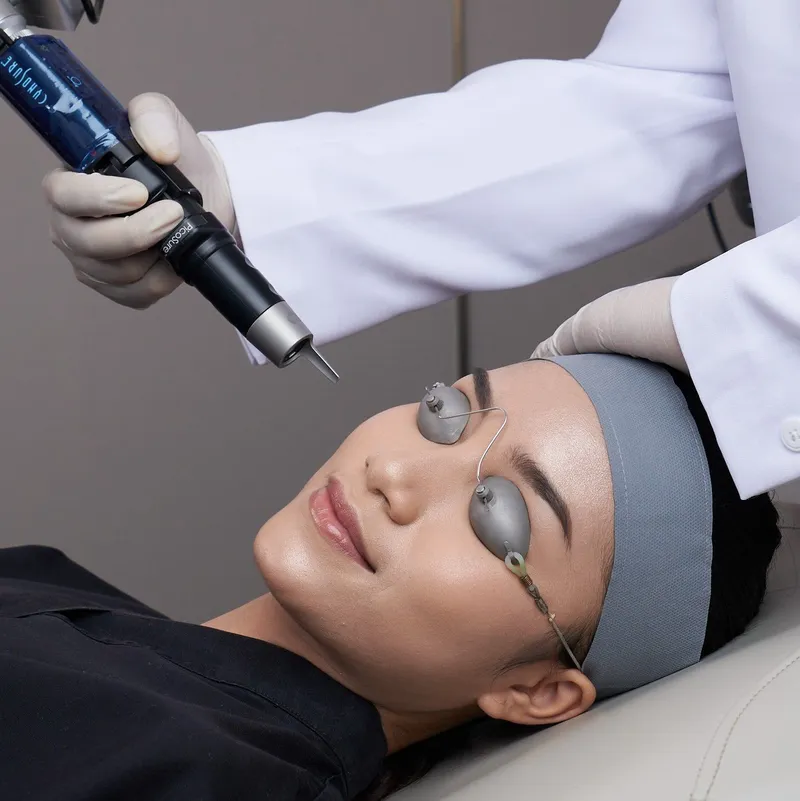
The targeted area is cleansed and we precisely treat each lesion or perform full-face toning in a systematic pattern.
Treated pigmentation darkens then flakes away over 7-10 days. Full clearance develops over 4-6 weeks as the lymphatic system clears melanin fragments.
Suitability
Aftercare
Treated spots will darken significantly—this is completely normal and actually a good sign that melanin absorbed the laser energy properly. Do not pick at darkening spots. Keep skin moisturized with gentle, fragrance-free moisturizer. Avoid makeup on treated spots if possible, or use mineral-only makeup if necessary.
Micro-crusts form and begin to flake off naturally. This is the melanin debris shedding from your skin. Do not pick, scratch, or force the flaking—let it happen naturally to avoid scarring or PIH. Keep skin well-moisturized. Gently cleanse with lukewarm water and mild cleanser. Continue strict SPF 50+ application.
Most visible crusting complete. Spots are significantly lighter, though some residual pigment may remain (requiring additional sessions). Skin may appear pink where spots were—this fades over 1-2 weeks. Resume gentle active ingredients (vitamin C acceptable, retinol if skin is not sensitive). Continue diligent sun protection.
Spots continue fading as lymphatic system clears remaining melanin particles. For optimal results, book next session at week 4-6. During this period, strict sun protection is critical—any UV exposure can trigger new pigmentation and undo your results. Wear SPF 50+ daily, reapply every 2 hours if outdoors, wear hats and protective clothing.
Gold-standard antioxidant serum with 15% vitamin C, 1% vitamin E, and 0.5% ferulic acid. Neutralizes free radicals, brightens skin, and enhances sun protection. Resume 5-7 days post-treatment.
Medical-grade broad-spectrum sunscreen with zinc oxide and niacinamide. Lightweight, non-comedogenic, and suitable for sensitive post-laser skin. Critical for preventing PIH and new pigmentation.
For melasma or stubborn pigmentation, prescription hydroquinone may be prescribed to use between laser sessions. Inhibits tyrosinase enzyme to prevent new melanin formation. Use only as directed, not indefinitely.
Ceramide-rich moisturizer (CeraVe, La Roche-Posay Cicaplast) to support healing and prevent dryness/flaking. Use twice daily during recovery period.
Benefits
Shatters melanin deposits to remove age spots, sun damage, and freckles in just 3-6 treatments.
A careful, gradual approach to stubborn hormonal pigmentation using conservative settings. Melasma needs ongoing management and cannot be permanently cured.
Our PicoSure runs at 755nm, which melanin absorbs strongly — so deeper tones (Fitzpatrick IV-VI) carry a real risk of post-inflammatory hyperpigmentation. We patch test first and use conservative settings to keep treatment as safe as possible.
Most clients return to normal activities immediately with just temporary redness and gradual pigment flaking.
From our Google profile, word for word.
"I have been seeing Natalia on and off for 10 years, and she is amazing. Professional, extremely knowledgeable, fair, and treats me with exceptional precision and care."
"A wonderful place for professional, caring and high-quality treatments. Natalia is knowledgeable, kind, and truly makes you feel comfortable and confident."
Pigmentation treatment cost · Markham
Achieve clear, even skin tone with advanced PicoSure technology. Package pricing available for series treatments.
Free consultation included with all packages.
Questions
Most age spots and sun damage clear in 2-4 PicoSure sessions spaced 4-6 weeks apart. Individual isolated spots often respond in just 1-2 treatments, especially lighter lesions. After each session, treated spots darken temporarily (frosting), then gradually flake off over 7-10 days. Progressive lightening continues between sessions as your lymphatic system clears fragmented melanin. For widespread sun damage, full-face treatments deliver more efficient results than spot-treating dozens of individual lesions.
PicoSure can help lighten melasma, but it takes a careful, gradual approach and manages rather than cures the condition. Melasma is hormonally driven and more resistant than sun spots, typically requiring 4-8 sessions with conservative settings to avoid triggering rebound pigmentation. We often combine laser treatment with prescription topicals (hydroquinone, tretinoin, kojic acid) and strict sun protection for optimal management. While melasma cannot be permanently cured due to its hormonal nature, PicoSure can significantly lighten patches and improve quality of life. Maintenance sessions every 3-6 months help control recurrence.
We treat all Fitzpatrick skin types, but darker skin needs extra care for pigmentation. Our PicoSure runs at 755nm, which is absorbed strongly by melanin — so on deeper skin tones (types IV-VI) there is a real risk of post-inflammatory hyperpigmentation if settings are too aggressive. We always patch test first, start with conservative settings, and pair treatment with strict SPF and gentle aftercare. For some deeper skin tones, or for melasma, a different wavelength or a non-laser approach can be safer — we'll tell you honestly at your free assessment whether PicoSure is the right fit for your skin.
PicoSure clears the existing pigmentation by shattering and removing melanin deposits, so treated spots typically don't return. However, new spots can form if you don't protect your skin from future UV exposure. Sun damage is cumulative—ongoing UV exposure will create new age spots over time. To prevent recurrence: wear broad-spectrum SPF 50+ daily (even cloudy days), avoid peak sun hours, wear protective clothing/hats, and consider maintenance treatments every 12-18 months. Melasma is more prone to recurrence due to hormonal triggers and typically requires ongoing management.
Age spots (solar lentigines): flat brown spots from cumulative UV exposure, typically on face/hands/shoulders. Sun spots: similar to age spots, caused by acute or chronic sun damage. Melasma: symmetrical brown patches on face triggered by hormones (pregnancy, birth control) plus sun exposure, deeper and more resistant to treatment. Post-inflammatory hyperpigmentation (PIH): dark marks left after acne, injury, or inflammation, common in darker skin types. Freckles: genetic, small tan/brown spots that darken with sun exposure. Each type responds differently to PicoSure and may require different treatment protocols.
Most clients tolerate PicoSure pigmentation treatment well without numbing cream. The sensation is often described as quick snapping or light rubber band flicks. Individual spot treatment causes momentary stinging that immediately subsides. Full-face treatments may feel more repetitive but remain tolerable. Sensitive areas like upper lip or close to eyes can be slightly more uncomfortable. Topical numbing cream is available for sensitive individuals. Treatment time is quick—spot treatment takes just 5-10 minutes, full-face sessions 20-30 minutes.
Related
Laser skin resurfacing to reduce wrinkles, improve texture, and restore youthful radiance.
Learn More →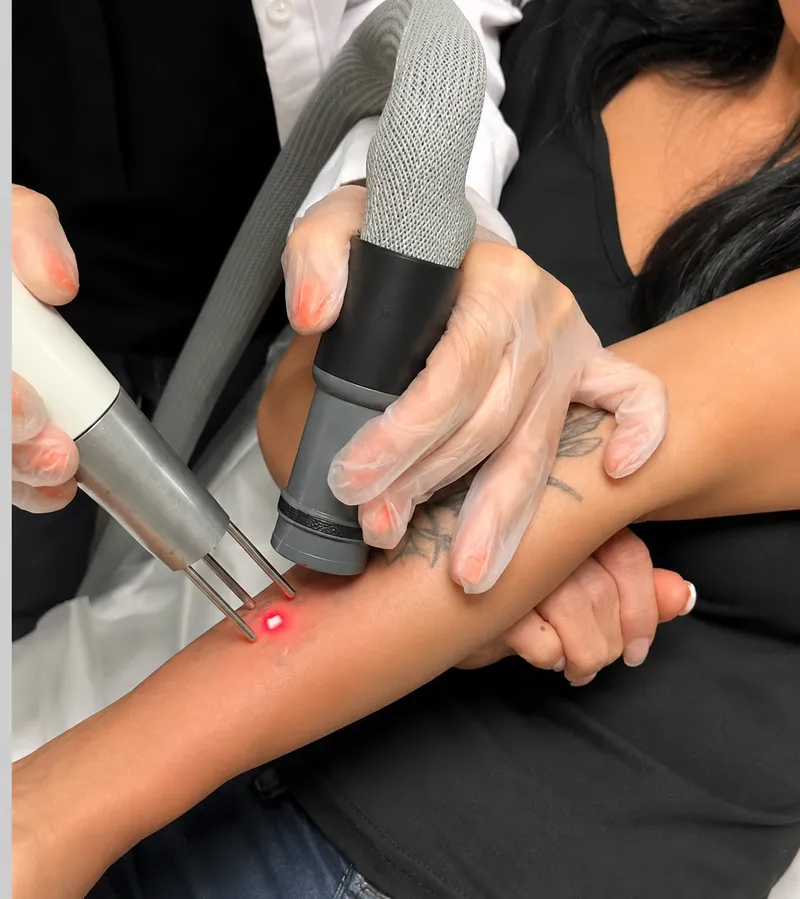
Advanced picosecond laser removes tattoos in fewer sessions with less discomfort.
Learn More →
Medical-grade facial that cleanses, extracts, and hydrates for instantly glowing skin.
Learn More →Visit
Book your free consultation to learn how PicoSure can safely and effectively address your pigmentation concerns.
World on Yonge (Yonge & Steeles), Markham, ON L3T 0C4
Free underground parking, enter from Yonge
Mon – Sat
10:00 – 19:00
Closed Sunday
*Statutory holidays vary, please call to confirm.